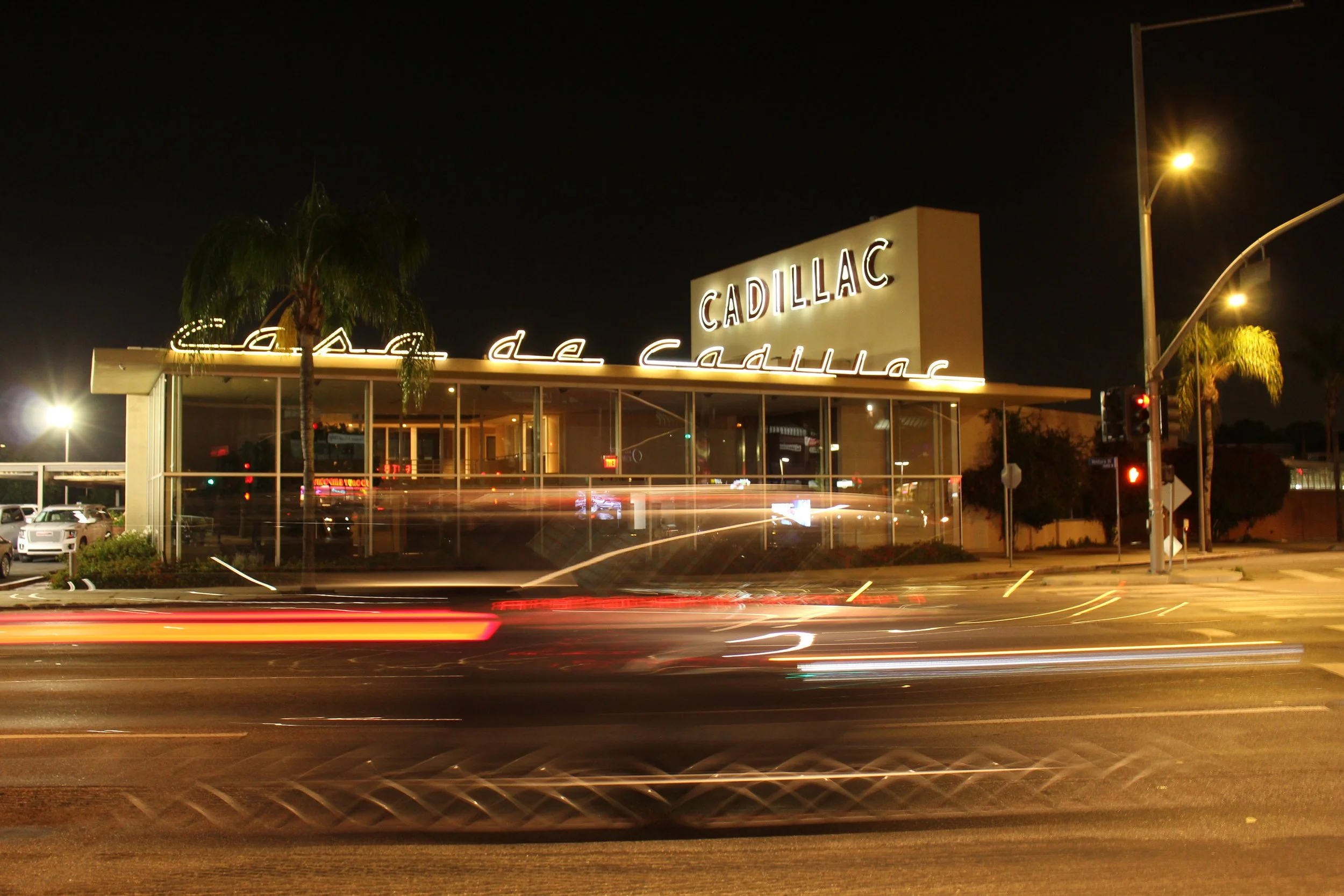
Casa de Cadillac
Driving along Ventura Boulevard, it’s easy to miss how much history is embedded in the everyday streetscape. Amid shops, apartments, and traffic, Casa de Cadillac stands as a reminder of a moment when Los Angeles was selling not just cars, but an idea of the future.
Opened in 1949 as the Don Lee Cadillac dealership, Casa de Cadillac was built at the height of the postwar boom. Southern California was expanding rapidly, the San Fernando Valley was coming into its own, and the automobile had become the ultimate symbol of freedom, status, and modern life. Cadillac, more than any other brand, embodied that aspiration.
The dealership was designed by Randall Duell, an architect whose work shaped much of mid-century Los Angeles. Duell understood that commercial buildings, especially car dealerships, were performative by nature. They weren’t just places to transact business; they were stages meant to impress, entice, and project confidence. Casa de Cadillac did exactly that.
Architecturally, the building embraced bold horizontal lines, a strong street presence, and a streamlined modern aesthetic that aligned perfectly with Cadillac’s image. Positioned prominently along Ventura Boulevard, it was designed to be seen from a moving car, a showroom for mobility itself. The architecture reinforced the promise: this is what modern success looks like.
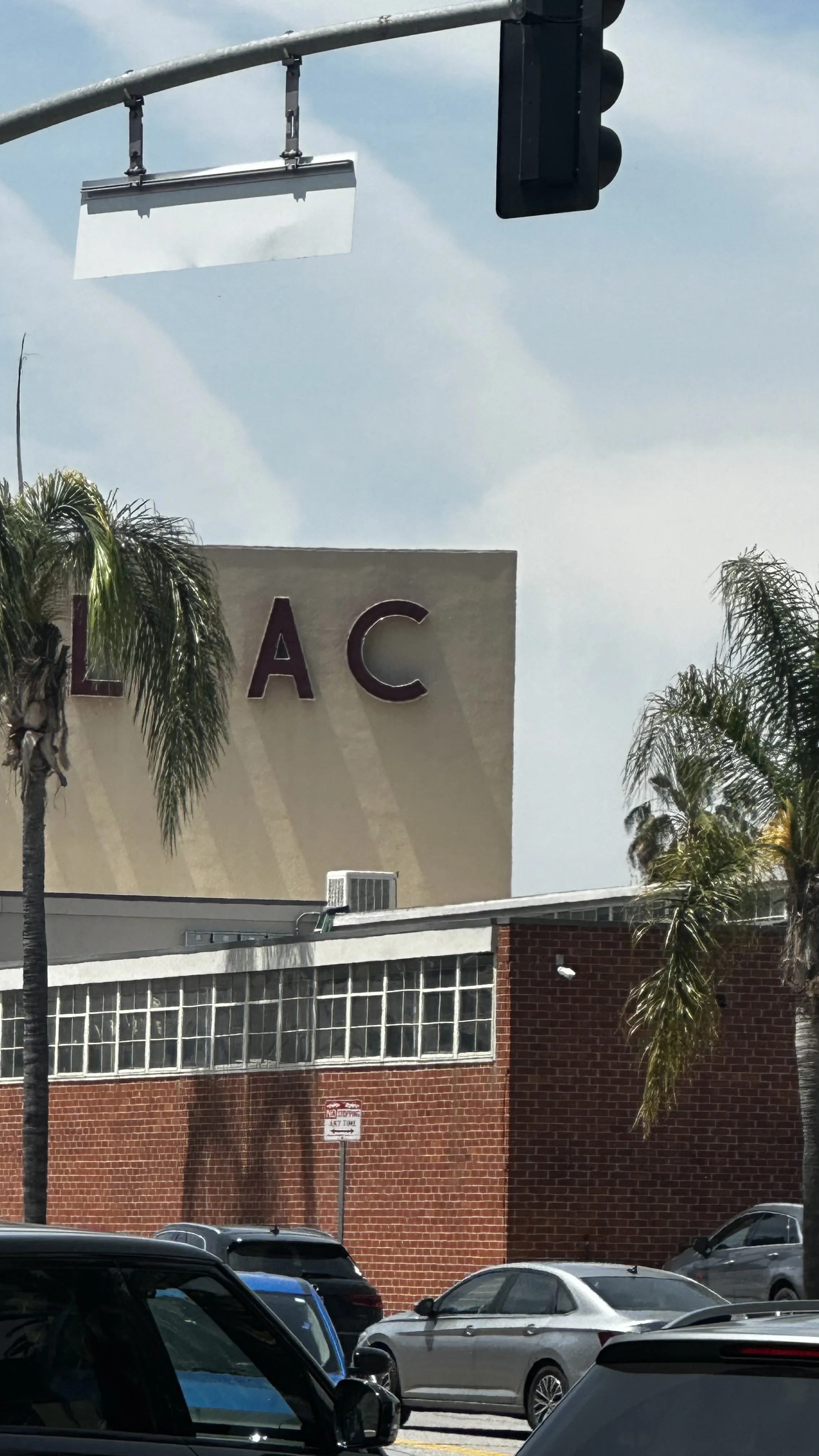
At the time, Sherman Oaks was still defining its identity. Developments like Don Lee Cadillac helped anchor Ventura Boulevard as a commercial spine for the Valley, transforming it into a destination rather than a pass-through. The dealership wasn’t just serving local residents; it was participating in the branding of the neighborhood and the broader Valley lifestyle.
Over the decades, the building’s use evolved, eventually transitioning from auto showroom to residential apartments—hence the name Casa de Cadillac. Yet the structure never fully lost its original character. The confidence of the design remains visible, even as its purpose shifted from selling cars to housing people.
Today, Casa de Cadillac feels like a time capsule. It represents an era when architecture, commerce, and optimism were tightly intertwined—when buildings were designed to sell dreams as much as products. In a city that constantly reinvents itself, its survival is notable.
Casa de Cadillac reminds us that Los Angeles history isn’t confined to museums or monuments. Sometimes it’s hiding in plain sight, along a familiar boulevard, quietly telling the story of who we were—and what we once believed the future would look like.